
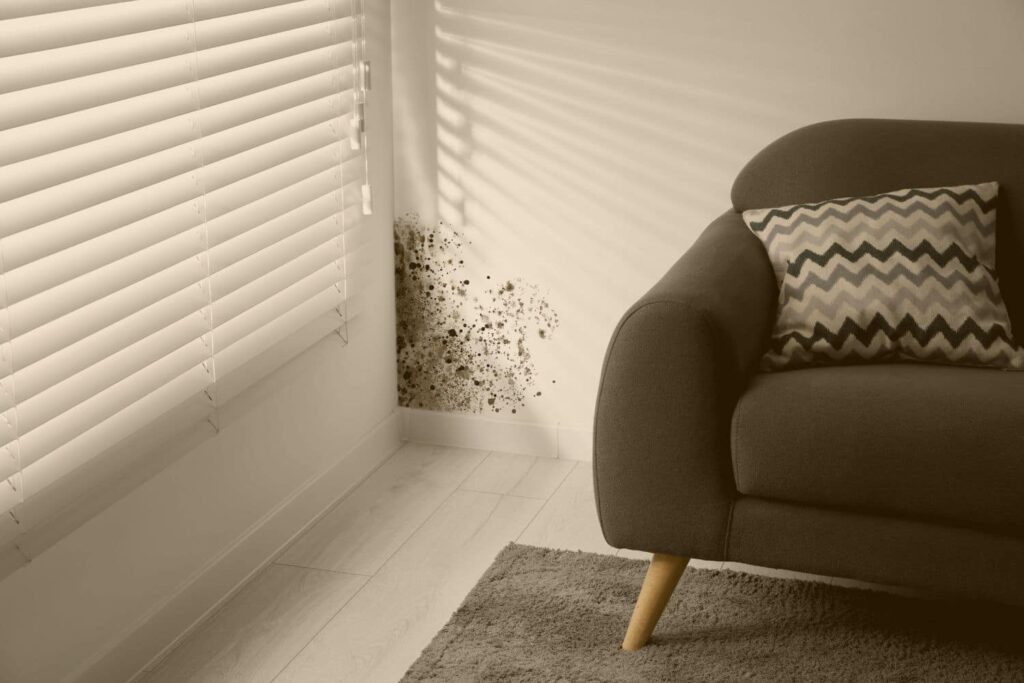
No, mold does not always have a smell. Some types of mold produce little to no odor, and even active colonies can go undetected when they are hidden behind walls or inside HVAC ductwork where air movement is limited. That means your nose alone is not a reliable way to confirm whether mold is present in your home.
At Prospective Home Inspections, our team regularly finds evidence of mold during testing in homes where no one noticed a smell. This guide explains why mold sometimes has no odor, what to look for instead, and when professional mold sampling is the right next step.
Why Mold Doesn’t Always Have a Smell
Mold produces odor through gases called microbial volatile organic compounds, or mVOCs. According to the EPA’s mold guidance, these compounds are released during active mold growth and are responsible for the musty smell people typically associate with mold problems. But the smell is not always detectable, for several reasons:
- Mold type: Some species, including early-stage Cladosporium and Penicillium, release far fewer mVOCs than others. Stachybotrys chartarum (black mold) tends to produce stronger odors, but not all mold is black mold.
- Location: Mold growing inside wall cavities, in attic insulation, or under flooring may not release enough mVOCs into living areas to register as a smell. The odor gets trapped.
- Colony size: Small or early-stage colonies may not produce enough mVOC output to detect, even to a sensitive nose.
- Airflow and temperature: In cooler, less ventilated spaces, mVOCs do not circulate freely. A colony that would smell in July may go unnoticed in February.
- Olfactory fatigue: People who live with low-level mold exposure over time can become desensitized to the odor and stop noticing it.
What Are mVOCs?
mVOCs are byproduct gases released as mold breaks down organic materials like drywall, wood, insulation, and carpet. There are over 200 known mVOCs, which is why mold odors vary from musty and earthy to faintly sweet or sour, depending on the mold type and the surface it grows on.
Signs of Mold Without a Smell
If your home has no obvious odor but you suspect mold, these are the warning signs to look for.
Physical Signs on Walls and Ceilings
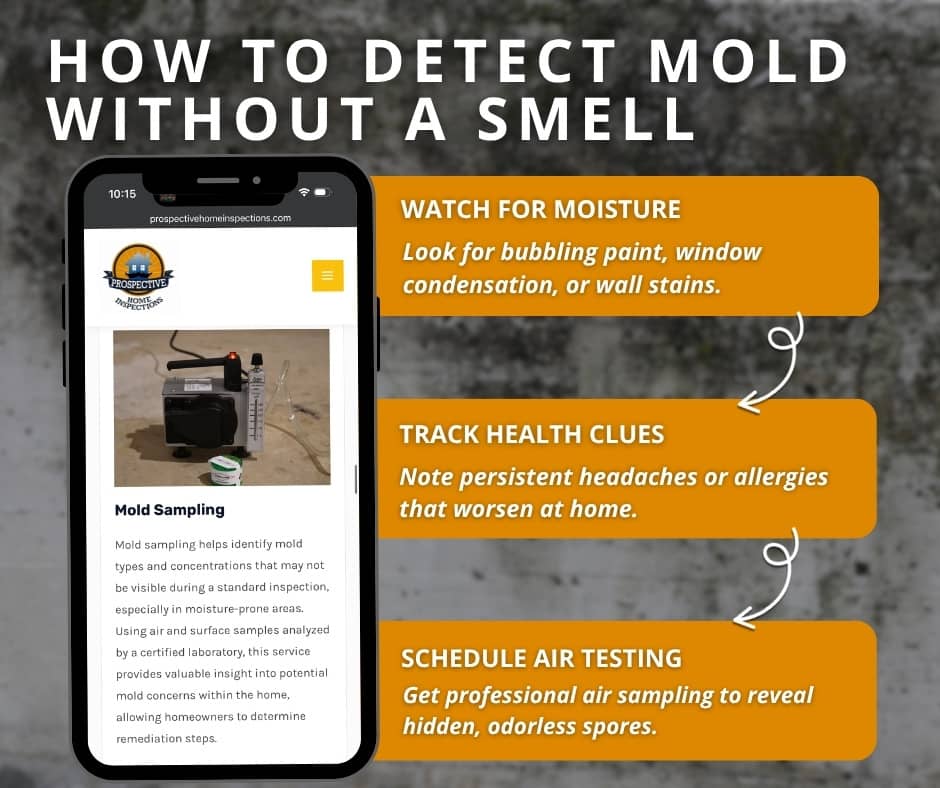
Mold growing behind a surface often pushes moisture toward the visible side before the mold itself becomes visible. Watch for:
- Yellowish or gray stains that appeared without a clear plumbing cause
- Paint that is bubbling, peeling, or lifting
- Wallpaper warping or separating at the seams
- Drywall that feels soft or slightly spongy
- Persistent condensation on windows, especially in certain rooms
These signs point to a moisture problem. Where there is long-term moisture, mold growth is almost always present or developing. The CDC notes that mold grows wherever moisture accumulates, including behind walls, in flooring, and inside HVAC systems.
Health Symptoms That May Point to Mold
Some people notice physical symptoms before they ever smell anything. Mold exposure can trigger:
- Sneezing, coughing, or nasal congestion that is worse at home and improves when you leave
- Itchy or red eyes with no other explanation
- Persistent headaches or fatigue without an obvious cause
- More frequent asthma symptoms
If symptoms follow this pattern (worse at home, better elsewhere), it is worth investigating your indoor environment even if nothing smells off.
What Does Mold Smell Like When There Is an Odor?
When mold does produce an odor, homeowners typically describe it as:
- Musty or stale, similar to old books or a damp closet
- Earthy, like wet soil or rotting leaves
- Slightly sour or sharp in some cases, similar to wet laundry left too long in the machine
The smell is often stronger in confined areas: closets, basements, or behind appliance panels. It may also intensify after rain or when the HVAC system kicks on, because humidity reactivates the colony and circulates mVOCs through ductwork.
Keep in mind that mold odor can fade and fluctuate. A colony that smells in humid summer months may go unnoticed in cooler weather, even though the mold is still present.
Common Places Mold Hides Without a Noticeable Smell
The most common spots where mold grows without producing an obvious odor include:
| Location | Why Smell Is Limited |
| Behind bathroom walls (near tub or shower) | Enclosed space with limited air circulation |
| Inside HVAC ductwork | Odor is distributed throughout the system rather than concentrated |
| Under carpet padding | Odor absorbed by flooring materials |
| Attic insulation | Remote from living areas; limited air exchange |
| Crawl space | Sealed off from the main house airflow |
| Around windows with failing seals | Colony too small; not enough mVOC output to notice |
In each of these locations, moisture is the trigger. A slow roof leak, a window seal that allows condensation, or a crawl space with elevated humidity can feed mold growth for months before any smell reaches the living area.
For a closer look at what causes a lingering odor when you cannot locate the source, see our related post on why your house smells musty, but you see no mold.
What a Standard Home Inspection Does & Doesn’t Cover
This is one of the most common questions we hear at Prospective Home Inspections, and it matters a lot for buyers and sellers.
A standard home inspection is a visual evaluation. Jeff Walters, owner and lead inspector at Prospective, brings over 30 years of hands-on experience in home construction, which means he knows where moisture problems tend to hide and what early warning signs look like during a walkthrough. He will note visible staining, moisture readings in flagged areas, and conditions that suggest elevated risk.
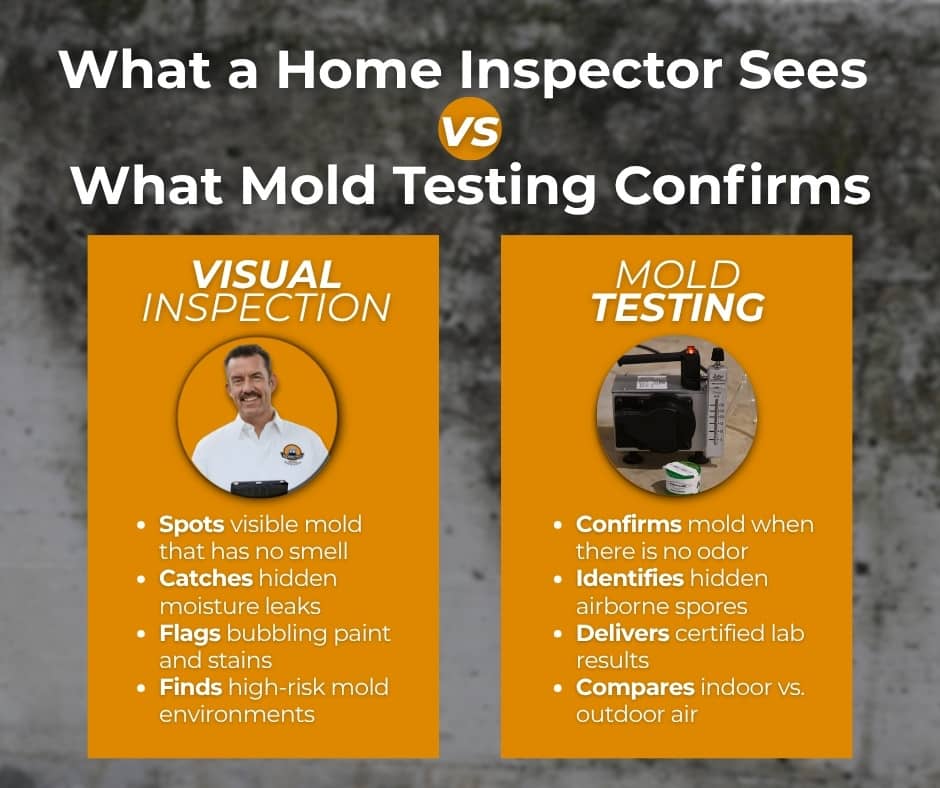
But a standard inspection does not include mold sampling, and visual findings alone cannot confirm whether mold is present, what species it is, or how concentrated it is.
Here is how to think about the difference:
| What a Standard Inspection Can Find | What Requires Mold Sampling |
| Visible staining or suspected microbial growth | Lab-confirmed mold presence |
| Moisture readings above baseline in walls or flooring | Airborne spore concentrations by species |
| Conditions that create mold risk (leaks, humidity, poor ventilation) | Whether mold is active vs. dormant |
| Areas warranting further evaluation | Specific remediation guidance based on species and volume |
If your inspection turns up any of these risk conditions, mold sampling is the next logical step. It takes the findings from “suspected” to “confirmed,” which matters whether you are negotiating a purchase price, planning remediation, or just trying to understand what you are dealing with.
Related Questions to Explore
Is a musty smell always mold? Not necessarily. A musty smell can also come from old carpet, a damp HVAC filter, or materials that absorbed moisture from a past leak. However, a persistent musty odor that does not resolve with cleaning and ventilation is worth investigating. Mold is a common cause, and it does not go away on its own.
Does black mold have a smell? Black mold (Stachybotrys chartarum) is generally associated with a stronger, heavier musty odor compared to other mold types. However, black mold growing behind walls or in low-airflow spaces can still go undetected by smell. The absence of a strong odor does not rule out black mold. Surface and air sampling analyzed by a certified lab is the only reliable way to identify which mold species are present.
How do I know if I have mold without seeing it? Look for physical clues: wall staining that appeared without a plumbing cause, bubbling or peeling paint, soft drywall, recurring condensation, or allergy-like symptoms that improve when you leave home. If your home has had any water intrusion (roof leak, plumbing failure, flooding, or elevated crawl space humidity), mold should be suspected even if nothing is visible or smellable. Air sampling can detect elevated spore concentrations before mold becomes visible.
Can I smell mold behind the walls? Sometimes. If a colony is large enough and there are gaps around outlets, baseboards, or trim, mVOCs can escape into the room and produce a localized smell. In many cases, though, mold behind drywall does not produce a smell strong enough to reach the living area. This is one of the main reasons professional air and surface sampling is more accurate than relying on smell alone.
When to Call a Professional
Schedule professional mold sampling if any of the following apply:
- You have had a water leak, flooding, or plumbing issue in the past two years
- You notice wall staining, bubbling paint, or soft drywall without a clear explanation
- Household members have recurring respiratory symptoms, headaches, or fatigue that are worse at home
- You smell a musty or earthy odor that does not clear up with ventilation and cleaning
- Your home inspection flagged moisture conditions or suspected microbial growth
- You are buying or selling and want confirmed data rather than visual assumptions
At Prospective Home Inspections, mold sampling includes air and surface samples analyzed by a certified laboratory. Air sampling compares indoor and outdoor spore concentrations to identify elevated levels even when mold is not visible. Surface sampling identifies the specific mold species and spore count when visible growth or staining is found. Results come back in a detailed written report alongside moisture readings from the inspection, giving you the full picture rather than a single isolated data point.
Mold sampling at Prospective is offered alongside a full home inspection, not as a standalone add-on. That matters because it means Jeff evaluates the whole home in context, connecting moisture findings to risk areas rather than sampling in isolation. We serve Naperville and the surrounding communities.
Conclusion
Mold does not always produce a smell, and that is exactly what makes it easy to miss. Some mold types release little to no odor. Colonies hiding in walls, attics, or crawl spaces may not circulate enough mVOCs to reach your nose, even after months of growth. And a standard visual inspection, while valuable, cannot confirm mold on its own.
Key takeaways:
- Odor alone is not a reliable way to rule out mold
- Physical signs like wall staining, bubbling paint, and moisture flags are often earlier warning signs than smell
- Mold sampling with certified lab analysis is the most accurate way to confirm or rule out hidden mold
If you have moisture concerns or want a clearer picture of your home’s indoor air quality, schedule a visit from Prospective Home Inspections online today.