Choosing the right local home inspector is one of the most important parts of any real estate transaction. Whether you are a buyer, a seller, or an agent helping a client navigate the process, the inspector you work with shapes how well everyone understands the home, how smoothly the transaction moves, and how confident your clients feel about their final decisions.
For agents, especially, recommending an inspector is a big deal. Your reputation goes with every referral. For buyers and sellers, the inspector you choose helps protect one of the biggest investments of your life. This guide walks through what to look for in a home inspector in Naperville and the surrounding area, and what separates a truly client-focused team from the rest.
What to Look for When You Choose a Home Inspector
A home inspection is one of the most important steps in the buying or selling process. The inspector you choose shapes how well everyone understands the home’s true condition.
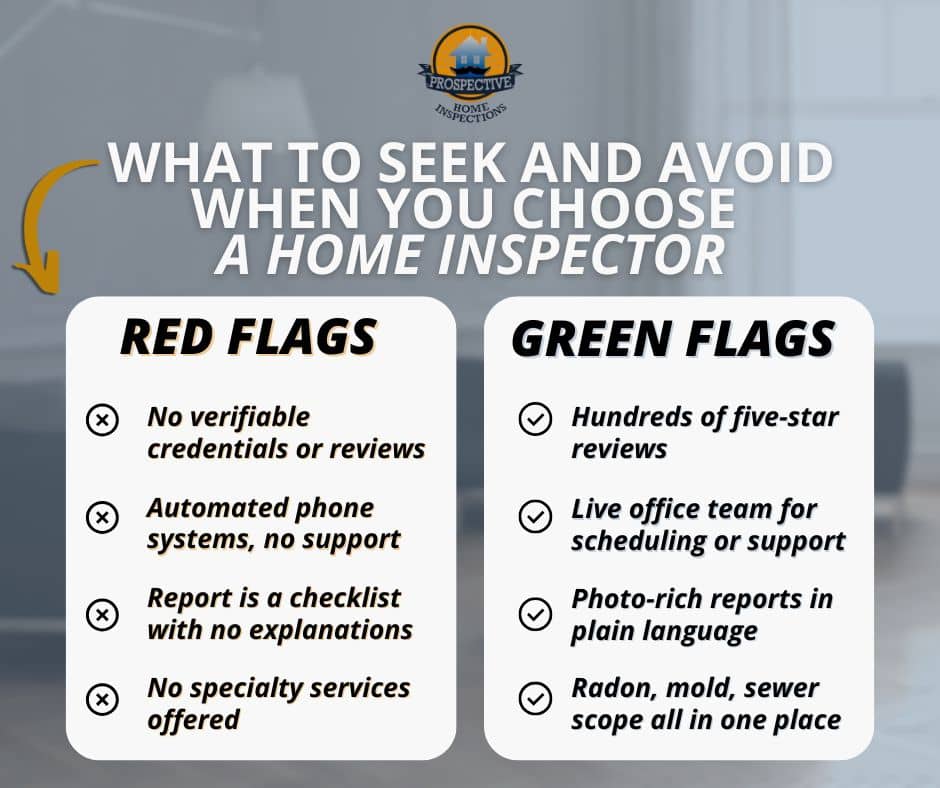
Look for an inspector who:
- Takes the time to carefully evaluate the home and explain findings in a clear, easy-to-understand report
- Welcomes questions from buyers, sellers, and agents throughout the inspection
- Provides photo-rich reports designed to educate, not just inform
- Offers specialty services like radon testing, mold inspection, and sewer scope inspections
- Uses modern tools like thermal imaging and drone technology
- Has a dedicated office team supporting scheduling, coordination, and follow-up
A great inspection experience starts well before the inspector arrives at the property and continues long after the report is delivered.
A Smooth Process From Start to Finish
Real estate transactions move quickly, which is why a well-run inspection team builds every part of the process around clarity and convenience.
From the first phone call, a dedicated office team should help with scheduling, questions, and coordination so no one is left wondering what comes next. Appointments should be easy to book through an online system, and the team should be just as available when plans shift and timing has to change.
Dedicated Office Support
When you call a home inspector’s office, your call should be answered by a live member of the team, not an automated system. People deserve real support during an important transaction.
Strong office support means:
- Help with scheduling appointments and answering questions about services and pricing
- Coordinating access with buyers, sellers, tenants, and agents
- Helping everyone understand what to expect before and after the inspection
- Quick rescheduling helps when plans change
- Coordinating additional services like radon testing, mold inspection, and sewer scope through one point of contact
For agents, that kind of office support means fewer delays, fewer dropped balls, and one reliable point of contact to keep the transaction on track.
Easy Online Scheduling
Scheduling an inspection should be simple, especially when a transaction is moving fast.
A good online scheduling system lets clients and agents book appointments quickly at any time of day, including evenings and weekends when many people are catching up on their next steps. You should be able to select the property type, choose the services needed, and view available appointment times without waiting for business hours.
Whether booking a standard home inspection or adding services like radon testing, mold inspection, or a sewer scope, it should all happen in one place.
Real Estate Touchpoints for Agents
For agents, a dedicated real estate touchpoint simplifies communication and transaction management. Through a dashboard or similar touchpoint, agents can schedule inspections, view appointment details, access completed reports, review invoices, and coordinate with the inspector all in one place.
Having everything centralized saves time, improves communication, and makes it easier to support clients from contract to closing.
Reports That Educate, Not Just Inform
A home inspection report should do more than list defects. It should help everyone involved truly understand what was found, why it matters, and what it means for the home moving forward.
- Documents findings in plain, easy-to-understand language
- Explains the significance of each condition, whether it is a maintenance item, safety concern, or defect needing further evaluation
- Includes clear color photographs of the actual findings
- Uses illustrations and diagrams to explain how major home systems like roofing, electrical, plumbing, HVAC, insulation, and drainage actually work
The goal is not just to point out concerns. It is to provide the context needed to understand severity, function, maintenance needs, and next steps. That approach reduces confusion, calms anxious buyers, and gives agents the clarity needed to keep transactions moving forward.
Trust Built Over Years of Experience
Trust is earned one inspection at a time. When choosing a home inspector, reputation matters, and consistent five-star reviews are one of the strongest indicators of the right team.
Hundreds of positive reviews reflect a real pattern: thorough inspections, clear communication, and reports that genuinely help people understand the home. For agents, that reputation provides confidence when making a referral. For buyers and sellers, it offers reassurance that the inspector has guided hundreds of clients through the same process they are standing in now.
One-Stop-Shop Convenience
Coordinating multiple vendors during a real estate transaction creates unnecessary delays and added stress. A one-stop-shop approach lets clients schedule critical auxiliary services alongside the home inspection through one trusted team.
These services are not just extras. They often uncover issues that a standard visual inspection cannot fully evaluate.
Radon Testing
Radon is an invisible, odorless radioactive gas that can enter a home through the soil beneath the foundation. Because it cannot be seen or smelled, testing is the only way to know whether elevated levels are present.
According to the EPA, approximately 1 in 15 homes in the United States has elevated radon levels, and radon is considered the second leading cause of lung cancer after smoking, contributing to roughly 21,000 deaths per year.
That makes radon testing especially important for homes with basements or lower-level living spaces, which covers most homes across the Naperville area.
Mold Inspection
Mold concerns are often about more than visible growth. They are usually a sign of an underlying moisture problem from leaks, poor ventilation, elevated humidity, roof issues, plumbing defects, or foundation seepage.
A mold inspection helps identify:
- Visible microbial growth
- Moisture intrusion areas
- Elevated humidity concerns
- Conditions that may lead to future growth
This can be especially important for families with asthma, allergies, or respiratory sensitivities, and it helps buyers understand whether a cosmetic issue may actually point to a larger building concern.
Sewer Scope Inspection
A sewer line is one of the most expensive hidden systems in a home, yet it is completely out of sight during a standard inspection. A sewer scope uses a specialized camera to inspect the main underground sewer line from the house to the municipal connection or septic system.
This test can reveal:
- Root intrusion
- Cracked or collapsed piping
- Offsets or separated joints
- Buildup and blockages
- Aging cast iron or clay lines
These issues can lead to repairs costing thousands of dollars, which makes sewer scopes especially valuable for older homes and properties with mature trees, both of which are common across the Naperville area.
Having these services available through one trusted team simplifies scheduling, reduces delays, and keeps the transaction moving while giving everyone a more complete understanding of the home.
Technology That Adds Real Value
Not all home inspections are created equal, especially when it comes to what can actually be seen and documented during the inspection. Advanced technology helps uncover conditions that may not be visible during a standard visual inspection alone.
Thermal imaging identifies temperature differences behind walls, ceilings, and other finished surfaces that the naked eye cannot see. It helps reveal:
- Hidden moisture intrusion or active leaks
- Missing or inadequate insulation
- Air loss around windows and doors
- Overheating electrical components
- HVAC performance irregularities
These temperature patterns often provide early clues about issues developing behind finished surfaces before visible damage appears.
Drone Technology for Roof Evaluations
Roofing is one of the most important and most expensive systems in a home, yet it is not always safe or practical to walk every roof surface. Drone imaging safely captures detailed views of:
- Roofing materials and wear patterns
- Flashing conditions
- Chimney and vent penetrations
- Ridge and valley conditions
- Gutter and drainage concerns
- Hard-to-access roof areas
Using advanced tools like thermal imaging and drone technology supports clearer, better-documented reports. For buyers, that means greater confidence. For sellers, it means better transparency. Whereas for agents, it means clearer communication and stronger documentation to support every transaction.
A Commitment to Clarity and Support
For agents, recommending an inspector means placing your reputation and your client’s trust in that team’s hands. For buyers and sellers, it means relying on the inspector to help you understand one of your biggest investments.
The right local home inspector delivers professional service, clear communication, and an inspection experience that gives everyone involved confidence and peace of mind.
From the first phone call to the final report, the process should feel informative, supportive, and easy to navigate. Buyers should feel educated, sellers should feel respected, and agents should feel confident in the service they are recommending.
Related Questions to Explore
How long does a home inspection typically take?
Most inspections take 2 to 4 hours, depending on the size, age, and complexity of the home, along with any additional services selected. That time allows for a careful, methodical review.
What is not included in a standard home inspection?
Home inspections are non-invasive, which means inspectors do not open walls, move belongings, or test systems beyond normal operation. Services like radon testing, mold sampling, and sewer scope inspections fill in the picture for systems that cannot be fully evaluated visually.
Do new construction homes really need an inspection?
Yes. New builds involve many trades working on tight timelines, and issues can still slip through. Pre-drywall and final new construction inspections catch problems while builder corrections are still straightforward.
Conclusion
Knowing how to choose a home inspector comes down to experience, communication, tools, reports, and the support behind the process. The right local home inspector brings all of those together so buyers, sellers, and agents can move forward with confidence.
If you are ready to schedule an inspection in Naperville or the surrounding area, or you are an agent looking for a trusted inspection partner, Prospective Home Inspections would be honored to be your reliable resource every step of the way. Schedule your inspection online today.