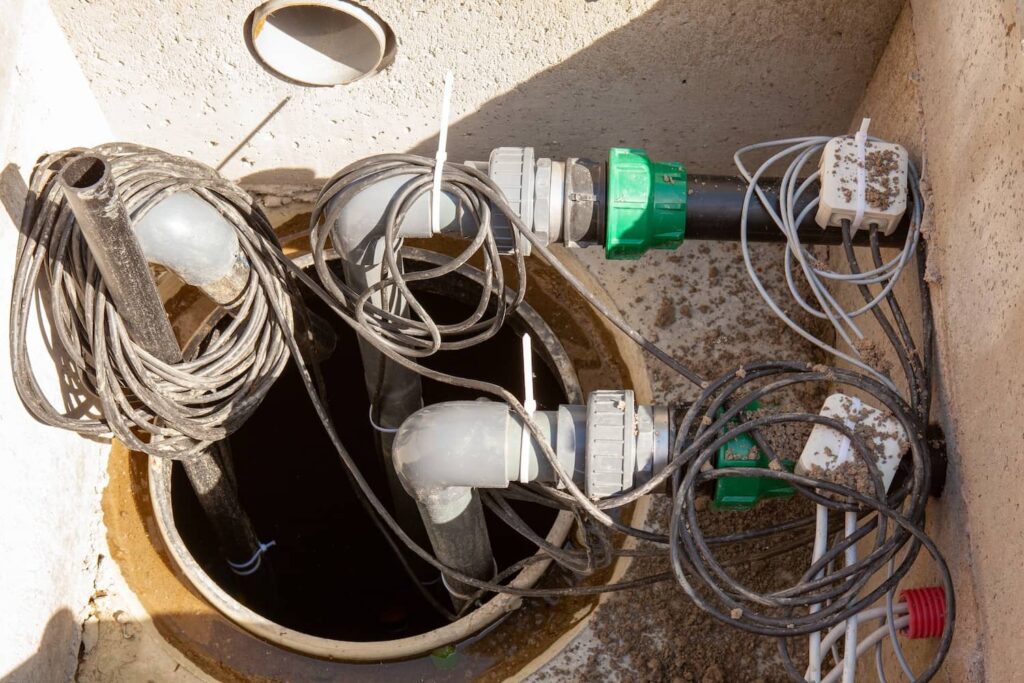
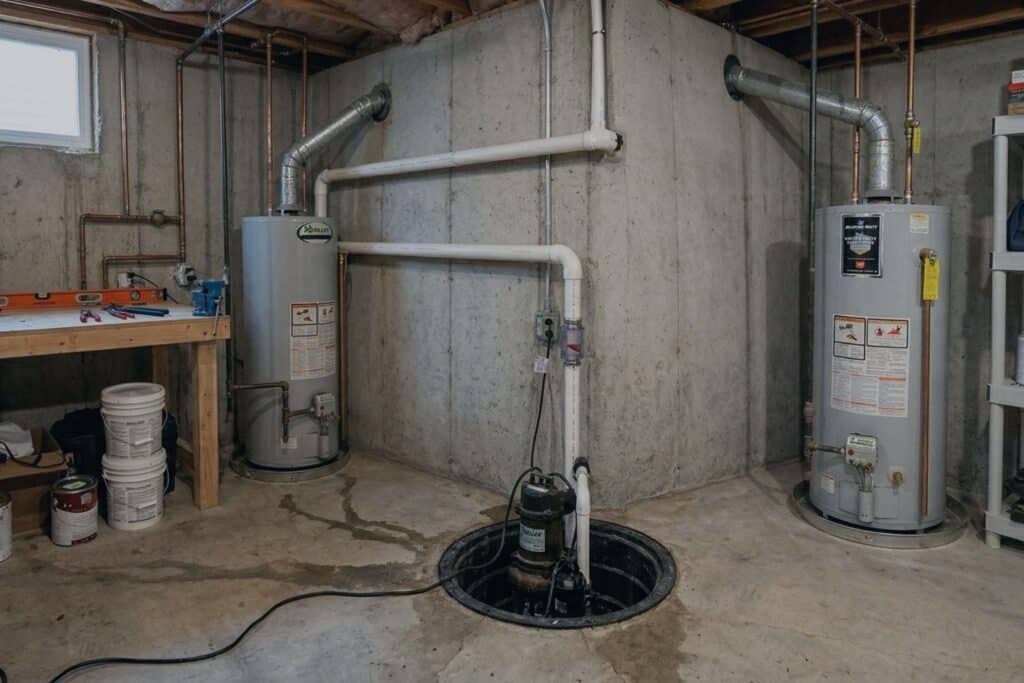
If you have a sump pump in your Naperville home, there’s a small component on the discharge pipe that most homeowners never think about until something goes wrong. It’s called a check valve, and without it working properly, your sump pump ends up fighting against itself, running more than it should, and wearing out faster than it needs to.
For buyers, sellers, and current homeowners in the Chicago suburbs, understanding what a check valve does, what a failing one looks like, and why it matters at inspection time is the kind of knowledge that pays off.
What Is a Sump Pump Check Valve?
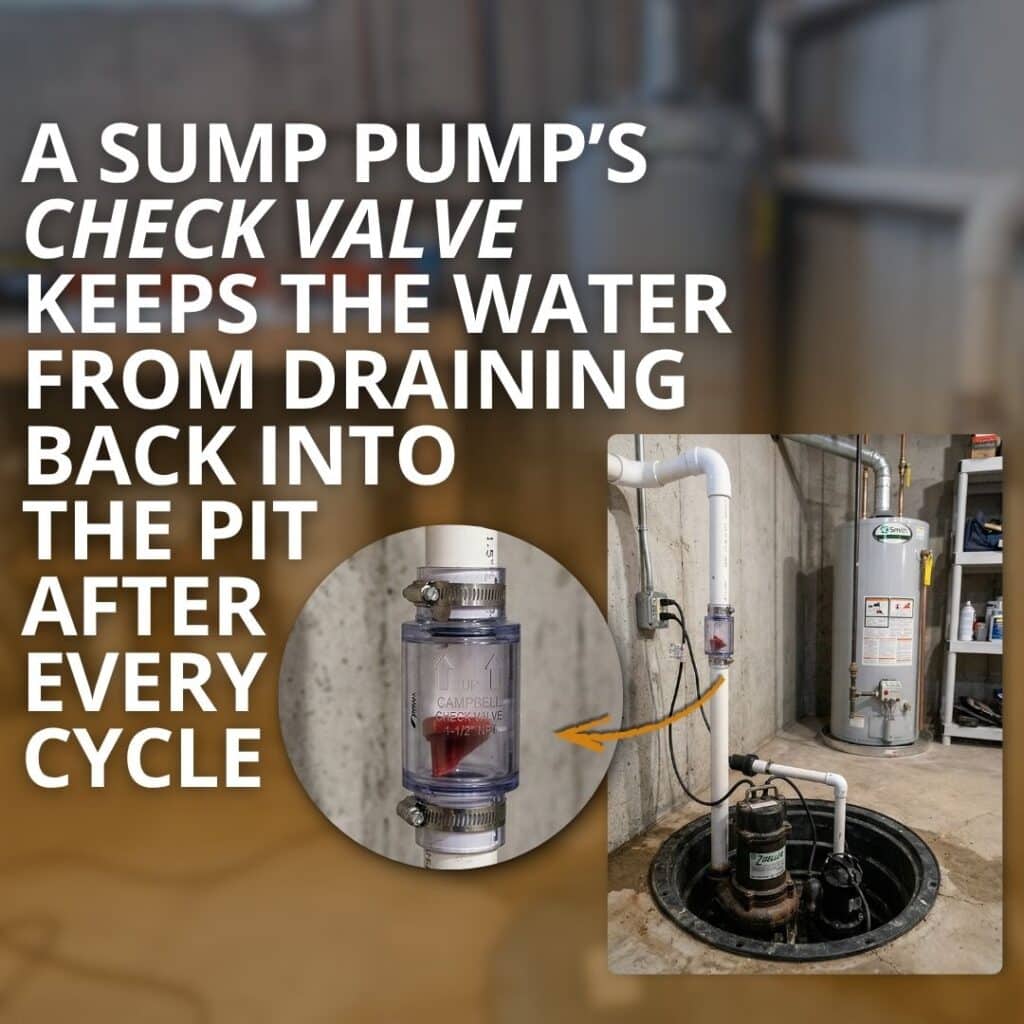
A check valve is a one-way valve installed on the discharge pipe, the pipe that carries water out of your sump pit and away from the house. Its job is simple: make sure water only flows in one direction, out.
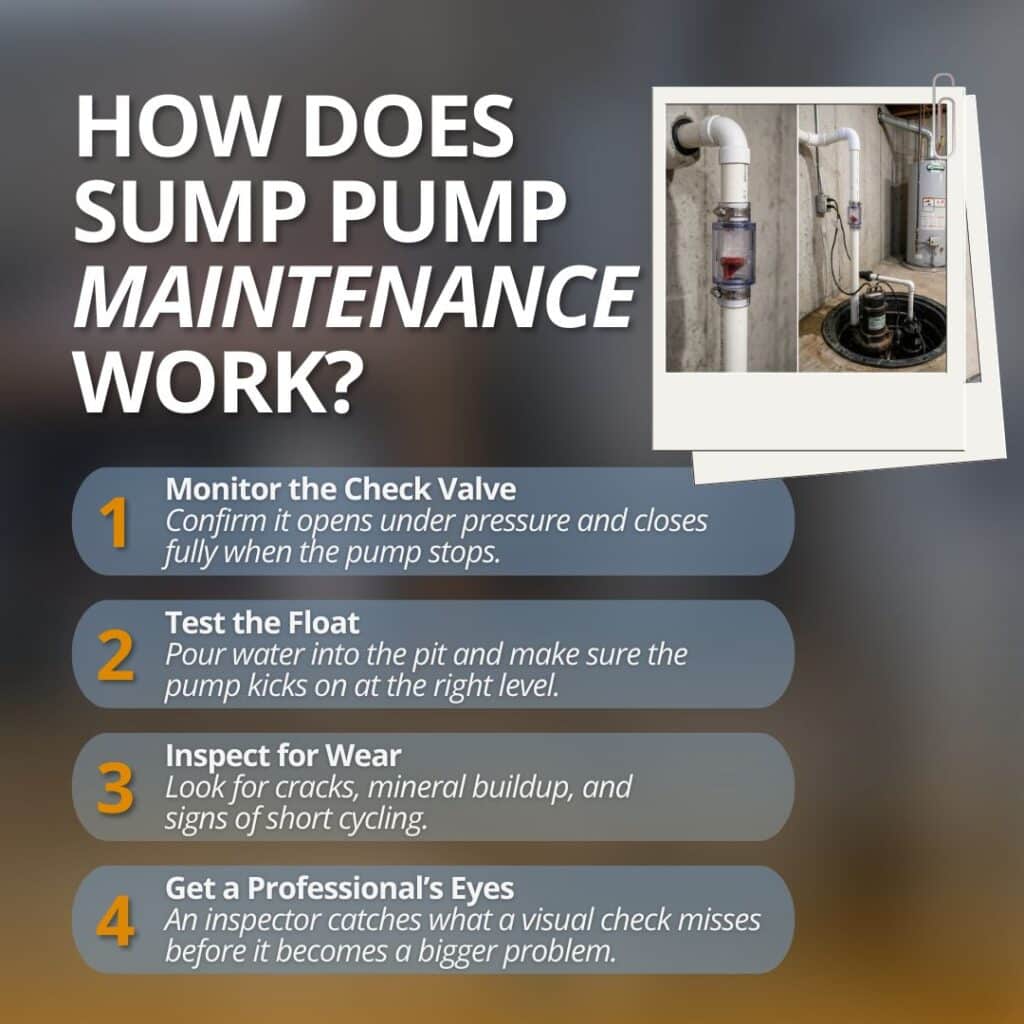
When the pump runs, it pushes water up through the discharge pipe and out of the home. When the pump shuts off, gravity tries to pull that water back down toward the pit. The check valve acts as a one-way gate, opening under pump pressure and closing when the pump stops, holding the water in the pipe so it can’t drain back into the basin.
Without it, water flows right back into the pit, the float rises, and the pump kicks on again to move the same water it just cleared. That cycle repeats until the pump wears down or the basement floods during a heavy rain event.
Why It Matters for Your Home and Your Inspection
A missing or failing check valve creates problems that compound over time, and many of them show up directly on a home inspection report.
- It wears out your pump faster: Short cycling puts significant extra strain on the motor. A pump that should last seven to ten years can fail much sooner when it’s moving the same water repeatedly. During a home inspection, signs of short cycling or a missing check valve are flagged as deferred maintenance items that buyers and sellers both need to understand before closing.
- It reduces your flood protection: When water drains back into the pit after every cycle, it raises the standing water level and shrinks the buffer between normal operating levels and overflow. For homes in Naperville and surrounding areas where heavy spring rains are the norm, that lost buffer is a real risk.
- It affects radon containment: The discharge pipe is a direct connection to the soil beneath your home, which is where radon originates. A properly functioning check valve is part of keeping that pathway sealed. Inspectors evaluate sump pit covers and discharge components with this in mind, and radon testing is a logical add-on any time sump system concerns are identified.
- It signals overall maintenance habits: A missing or degraded check valve is a small thing, but inspectors notice it. It’s the kind of finding that raises broader questions about how well a home has been maintained, especially when combined with other deferred items in the basement.
Where to Find It and What to Look For
The check valve is a cylindrical fitting on the vertical section of the discharge pipe, above the pump and below where the pipe turns horizontal to exit the home. Most have an arrow printed on the side indicating the direction of flow. That arrow should point away from the pump toward the exit point of the pipe.
Not every sump installation includes a check valve. If you’re not sure whether yours has one, that’s worth confirming before your next inspection or before listing your home.
Signs your check valve may be failing:
- The pump runs in short, frequent cycles during or after rain
- You hear a gurgling or draining sound shortly after the pump shuts off
- The pump seems to run constantly, even in dry conditions
- Visible cracks, mineral buildup, or a valve that no longer closes firmly
- No check valve is present on the discharge pipe at all
Mineral deposits from hard water are common throughout DuPage County and can accumulate inside the valve over time, preventing a full seal even when the valve looks intact from the outside.
How Long Do Check Valves Last?
Most check valves last three to ten years, depending on pump frequency, water quality, and the quality of the valve at installation. Homes with high water tables or heavy clay soils, both common in the Chicago suburbs, cycle their sump systems more often and put more wear on every component.
| Factor | Effect on Lifespan |
| High pump cycle frequency | Shortens lifespan |
| Hard water / mineral buildup | Can cause early seal failure |
| Infrequent use | May dry out rubber components |
| Poor installation or wrong orientation | Reduces reliability significantly |
The check valve wears out independently of the pump. A newer pump does not mean the valve is in good shape, and inspectors evaluate them separately.
Can You Replace It Yourself?
For handy homeowners, replacing an old check valve is manageable. The process involves unplugging the pump, cutting out the old valve, and installing a new one with PVC connectors and sealant. Keep these in mind:
- Match the replacement to your pipe diameter, typically 1.25 or 1.5 inches for residential systems
- Use a spring-loaded valve for better long-term performance over a basic flap type
- Double-check the arrow orientation before finishing; an incorrectly installed valve blocks flow entirely
- Allow the sealant to cure fully before restoring power
If the system includes a battery backup, radon mitigation piping, or a more complex configuration, call a plumber.
Improper installation in a system with additional components creates problems that are harder to sort out later, and those configurations come up regularly in inspections throughout the Naperville area.
Related Questions
What other plumbing components do home inspectors evaluate?
Quite a bit beyond the sump system. During a full inspection, inspectors assess the water heater, main shutoff valve, visible supply and drain lines, ejector pumps if present, and any signs of active or past leaks throughout the home. In older Naperville-area homes, especially, plumbing condition is one of the areas where buyers most often encounter unexpected findings.
What does efflorescence on basement walls actually mean?
That white, chalky residue on concrete or masonry is caused by water moving through the material and depositing minerals on the surface as it evaporates. It’s one of the earliest visible signs of moisture intrusion in a basement and a signal worth paying attention to before it develops into a larger structural or mold-related concern.
What is a pre-drywall inspection, and when does it happen?
A pre-drywall inspection takes place during new construction, after framing and mechanical rough-ins are complete, but before the walls are closed up. It’s one of the only opportunities to visually confirm that plumbing, electrical, and structural components were installed correctly before they become inaccessible. For buyers building new in the Naperville area, it’s a step worth taking.
How does radon enter a home, and what reduces the risk?
Radon is a naturally occurring gas that rises from the soil and enters homes through foundation cracks, gaps around pipes, and unsealed sump pits. It’s colorless and odorless, which makes testing the only reliable way to know whether levels are safe. Homes across the Chicago suburbs are worth testing, and the sump system is one of the components inspectors pay attention to when evaluating potential radon entry points.
When to Call a Professional
The check valve is an inexpensive part. The problems that follow from ignoring a failing one are not. Reach out to a home inspector if:
- You’re buying a home and want to fully understand the sump system’s condition before closing
- You’re preparing to sell and want to get ahead of basement findings before buyers do
- You’re in your first year of a new build and want systems confirmed before your builder’s warranty expires
- You want a full basement and plumbing walkthrough as part of a pre-purchase or maintenance inspection
At Prospective Home Inspections, Jeff Walters provides thorough evaluations of sump systems, basement conditions, plumbing, and more for buyers, sellers, and homeowners throughout Naperville, Lisle, Bolingbrook, Downers Grove, and surrounding DuPage County communities. If something in the basement doesn’t look right, you’ll know exactly what it is before it becomes a bigger problem.
Conclusion
A sump pump check valve is a small part with a big job. It protects your pump from unnecessary wear, helps keep your basement dry when storms roll through, and plays a direct role in keeping your home’s air quality in check. For homeowners across the Chicago suburbs, it’s not a component worth overlooking.
Whether you’re buying, selling, or maintaining a home in the Naperville area, a professional inspection gives you a clear picture of where things stand before a small issue becomes an expensive one. Prospective Home Inspections is here to help. Schedule your inspection today.