
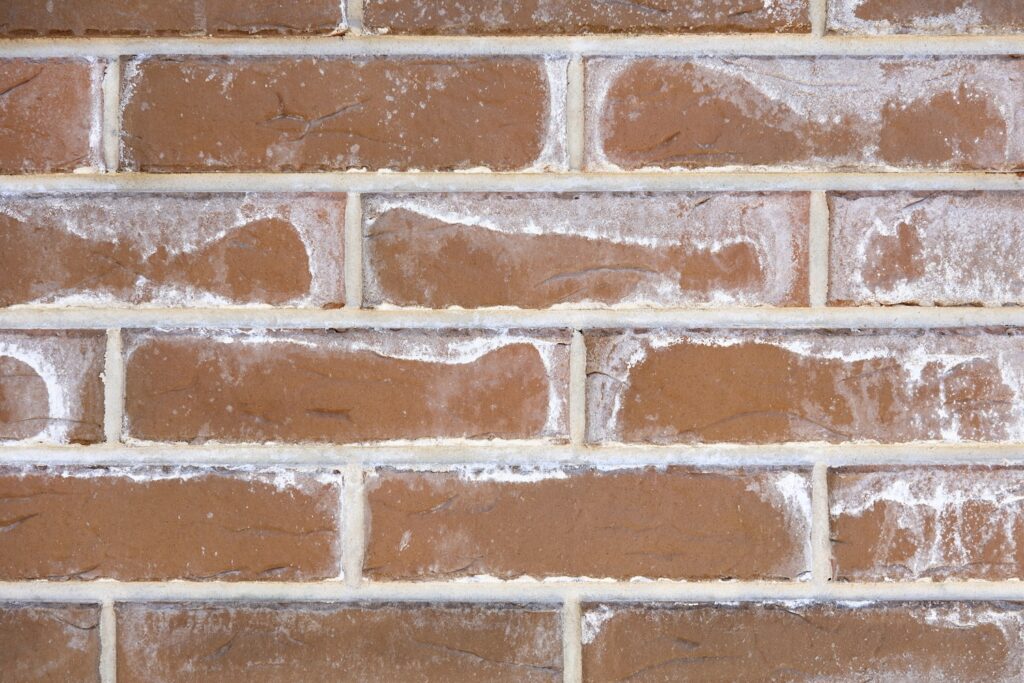
If you notice a white, powdery substance on brick, basement walls, concrete floors, or masonry around your home, you are most likely seeing efflorescence. Many Naperville homeowners assume this white residue is mold or a paint defect, but it is actually a mineral deposit left behind when water moves through masonry. Understanding what efflorescence means, how to remove it, and how to prevent it can help you protect your home and recognize when a more serious moisture issue may be forming.
This is common in the Midwest, especially in places like Naperville, where seasonal moisture, snowmelt, and periodic heavy rain affect foundations and exterior walls.
While efflorescence itself is not harmful, it can point to moisture conditions that may need attention. Understanding what efflorescence means, how to remove it, and how to prevent it can help you protect your home and recognize when a more serious moisture issue may be forming.
This guide explains everything in simple terms and shows how home inspectors evaluate efflorescence during a full inspection.
What is Efflorescence and Why Does It Show Up?
Efflorescence forms when water dissolves natural salts inside concrete, brick, block, or mortar. When that water moves to the surface and evaporates, it leaves those salts behind in the form of a white powder or crust.
Three things must be present for efflorescence to appear:
- Water-soluble salts
- Moisture entering the material
- A pathway for moisture to reach the surface
All three of these are common in Illinois homes. Concrete and masonry naturally contain minerals, and Naperville’s climate provides plenty of moisture from rain, snow, and freeze-thaw cycles.
Efflorescence does not always mean there is a serious problem, but it does tell you that water is moving through the material. During a home inspection, this movement is a key factor because moisture can affect structural components, finishes, and indoor air quality over time.

How to Identify Efflorescence
Efflorescence is easy to mistake for mold, paint dust, or construction debris, but it has some clear signs.
Texture
Efflorescence feels powdery, dry, and chalk-like. It can usually be brushed off by hand or with a dry cloth. Mold, on the other hand, feels fuzzy or slimy depending on its stage of growth.
Color
Most efflorescence is bright white, but it can also appear grayish depending on the minerals present. Mold may appear white at first, but often turns dark or green as it grows.
Location
Efflorescence commonly forms on:
- Basement walls
- Concrete floors
- Brick chimneys
- Exterior brick or stone
- Block foundations
- Garage walls
In Naperville, homeowners often notice it after snowmelt or periods of heavy rain.
Testing
A simple water drop test helps identify efflorescence. If the powder dissolves when it gets wet and then reappears when the water dries, it is most likely efflorescence. Mold does not dissolve like this.
Why is Efflorescence Common in the Midwest?
Naperville experiences a mix of seasonal weather patterns that push moisture in and out of masonry.
Snow and Freeze-Thaw Cycles
When snow sits against brick or concrete, water can seep in and freeze. As temperatures rise during the day, the meltwater moves toward the surface. This movement brings salts with it. The U.S. Geological Survey notes that this freeze-thaw movement is one of the top drivers of salt deposits in masonry.
Spring Rain and High Groundwater
Naperville has clay-rich soil that drains slowly. When the ground becomes saturated, moisture often pushes inward through foundation walls. This wet-to-dry pattern helps carry minerals to the surface, creating efflorescence for you to remove.
Basement Humidity in Older Homes
Many older Naperville homes have partially finished or unfinished basements. These spaces often have higher humidity, and any moisture coming through concrete or block walls can leave visible deposits.
Exterior Brick Exposed to Weather
Wind-driven rain is common in Illinois, especially during storms that come from the west. Brick on the exterior of homes absorbs moisture during these events, which makes efflorescence more likely as the wall dries.
Is Efflorescence Harmful?
Efflorescence itself is not harmful, and it can be simple to remove. It is simply minerals that have moved to the surface.
However, it is a sign of moisture movement, and depending on the amount and frequency, it can be a clue that further investigation is needed.
Efflorescence becomes a concern when:
- It returns quickly after cleaning
- It appears on large areas of a basement wall
- It shows up along cracks or joints
- It is accompanied by damp smells or staining
- The wall feels cool or damp to the touch
In these cases, a home inspector may recommend further evaluation to check for water intrusion, poor grading, gutter issues, or drainage concerns.
The Brick Industry Association explains that efflorescence itself is cosmetic but should be monitored because it may indicate underlying moisture that can lead to long-term damage if not addressed.
How to Remove Efflorescence Safely
Removing efflorescence is simple in most cases. The key is to clean it gently and avoid forcing extra moisture into the material.
Dry Brushing
Dry brushing is the safest and most effective first step. Using a stiff nylon brush, you can sweep the powder away without adding moisture. This works well on smooth concrete, block, and brick.
Vacuuming Dust
A shop vacuum helps collect loose material after brushing. This keeps powder from settling on floors or spreading to other areas of the basement or garage.
Light Washing for Stubborn Spots
If dry cleaning does not fully remove the residue, a mild cleaning solution can help. Mix warm water with a small amount of white vinegar or gentle detergent. Apply lightly with a sponge and avoid saturating the wall. After cleaning, allow the area to dry completely.
The Building Science Corporation notes that heavy washing or pressure washing can drive water deeper into the wall, which increases the chance of future efflorescence.
Avoid Harsh Chemicals
Acid cleaners, bleaches, and other aggressive products can damage mortar joints, paint, and concrete finishes. These are rarely needed and often make the problem worse.
Why Might Efflorescence Come Back?
If efflorescence returns quickly after cleaning, that tells you moisture is continuing to move through the wall or surface. In Naperville, the most common reasons for recurring efflorescence include:
- Gutters that overflow and dump water against the foundation
- Improper grading that slopes toward the home
- Cracks in foundation walls
- Downspouts that end too close to the house
- High indoor humidity levels
- Lack of a vapor barrier behind finished walls
Recurring efflorescence does not always mean there is a structural issue, but it does mean moisture control needs improvement.

How to Prevent Efflorescence Long Term
Long-term prevention focuses on reducing moisture entry and improving the home’s ability to dry.
Improve Drainage Outside the Home
Gutters and downspouts matter more than most homeowners realize. Make sure:
- Gutters are cleaned regularly
- Downspouts extend at least 4 to 6 feet from the foundation
- Soil slopes away from the home on all sides
These basic steps help control water buildup near the basement walls.
Seal Masonry with Breathable Products
Breathable masonry sealers allow moisture vapor to move out of the wall while blocking liquid water from entering. These can reduce efflorescence on exterior brick and concrete.
Lower Basement Humidity
A dehumidifier helps maintain stable humidity. The EPA recommends keeping indoor humidity below 60 percent. This slows the moisture cycle that leads to repeated salt deposits.
Repair Cracks Early
Hairline cracks can allow water to enter during storms or snowmelt. Sealing small cracks as they appear reduces moisture pathways.
Improve Foundation Waterproofing
Older Naperville homes may lack modern waterproofing systems. Adding exterior drainage membranes, interior drainage channels, or sump pump upgrades can improve moisture control.
Verify That Plumbing Is Not Leaking Nearby
Sometimes indoor plumbing leaks mimic the effects of exterior moisture. Inspectors often find small leaks behind drywall or near floor drains that contribute to efflorescence.
What Efflorescence Reveals During a Home Inspection
Home inspectors evaluate efflorescence carefully before guiding you to remove it, because it is a clue about the home’s moisture behavior. Prospective Home Inspections often see efflorescence during full buyer inspections in Naperville and the surrounding areas, especially in older basements.
Efflorescence may indicate:
- Moisture that enters through small cracks
- High soil saturation around the foundation
- Poor exterior drainage
- Roof runoff is not being directed away
- The basement humidity needs correction
- Construction materials that absorb water easily
Inspectors also note the pattern, spread, and moisture level. A small area near a corner may simply be cosmetic. Large, repeated areas may call for further evaluation by a waterproofing specialist.
Common Related Questions Naperville Homeowners Ask
Is efflorescence the same as mold?
No. Efflorescence is a mineral deposit. Mold is a biological growth that needs moisture and organic material.
Can efflorescence weaken a foundation?
Not directly. But it shows that moisture is moving through the wall, which may lead to long-term issues if ignored.
Should I worry about efflorescence when buying a home?
Efflorescence is common, but it should be reviewed to understand the source of moisture.
When to Call a Professional
If efflorescence returns frequently, covers large areas, or is paired with damp smells or spalling concrete, it is a good idea to contact a professional. A home inspector can evaluate the location, pattern, and possible source of moisture.
Prospective Home Inspections provides detailed evaluations throughout Naperville and nearby communities. An inspector can determine whether the efflorescence is cosmetic or if moisture management improvements are needed.
Conclusion
Efflorescence is a common and often harmless mineral deposit, but it should not be ignored. It provides helpful clues about how moisture moves through your home. By understanding what it means, how to remove it, and how to prevent it, you can protect your basement, improve air quality, and avoid future moisture issues.
If you are buying a home or noticing changes in your current one, a professional inspection can help you understand the cause and take the right next steps.