This guide explains how a GFCI outlet works, common reasons the reset button gets stuck, safe steps for homeowners to fix it, and how to know when it is time to call a home inspector or a licensed electrician.
A GFCI outlet that will not reset can be frustrating and concerning, especially when it stops working without warning. Many homeowners first notice the problem when an outlet in the bathroom, kitchen, garage, or outside suddenly loses power, and the reset button refuses to stay in place.
Sometimes the cause is simple, such as a plugged-in appliance or temporary moisture. Other times, a stuck reset button points to a deeper electrical issue that should not be ignored. Knowing how to troubleshoot the problem safely helps you decide whether this is something you can resolve on your own or a situation that requires professional help.
What a GFCI Outlet Does and Why It Trips
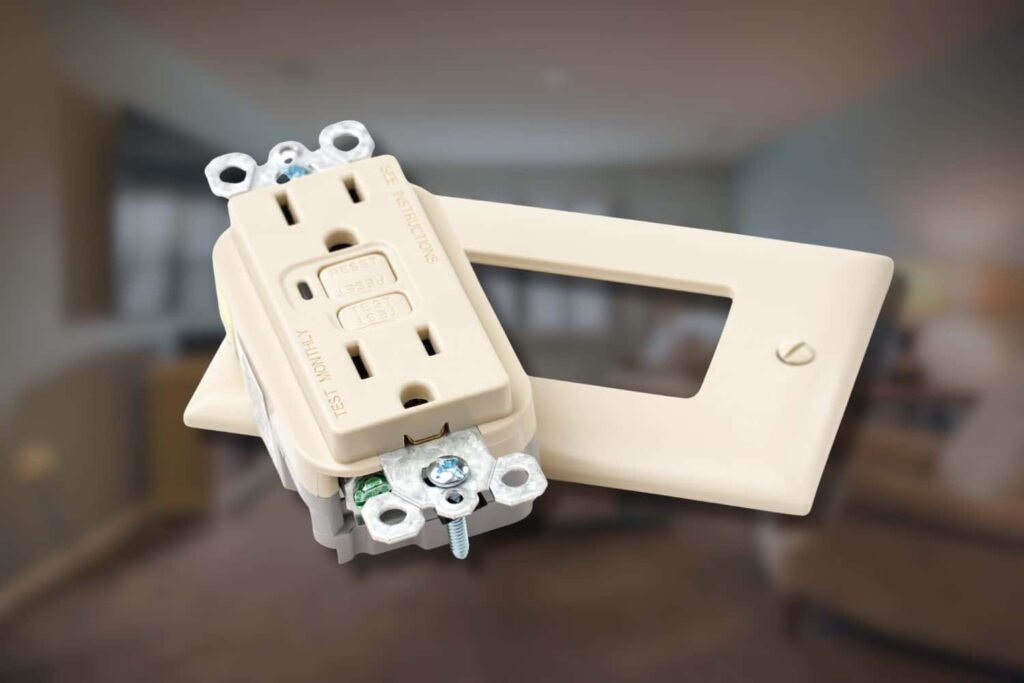
A GFCI outlet, short for ground fault circuit interrupter, is designed to protect people from electrical shock. It works by constantly monitoring the flow of electricity through the circuit. When the outlet detects an imbalance between the hot and neutral wires, it shuts off power almost instantly.
That imbalance usually means electricity is flowing somewhere it should not, such as through water, damaged wiring, or a faulty appliance. According to the Electrical Safety Foundation International, GFCI devices greatly reduce the risk of electrocution in areas where moisture is present, which is why building codes require them in specific locations.
GFCI outlets are commonly installed in areas where moisture is more likely, including:
- Bathrooms
- Kitchens
- Laundry rooms
- Garages
- Basements
- Exterior outlets
These areas combine electricity with water or humidity, which increases the risk of shock. The GFCI outlet acts as a safeguard by cutting power before a dangerous situation can escalate.
When a GFCI trips, it cuts power immediately. This is a safety response, not a malfunction. The reset button restores power only after the unsafe condition has been resolved.
Why a GFCI Reset Button Gets Stuck
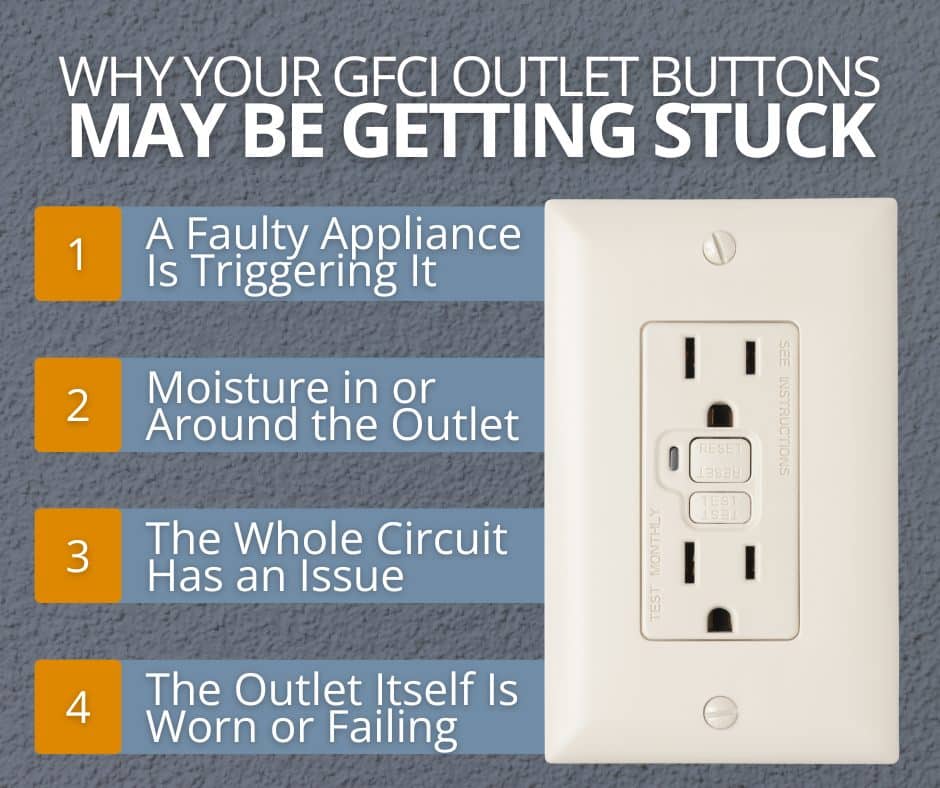
A reset button that will not stay in place usually means the outlet is still detecting a problem. Pressing harder will not fix the issue and can damage the outlet.
Common reasons a reset button stays stuck include:
- A plugged-in appliance is causing a ground fault
- Moisture inside the outlet or electrical box
- A downstream outlet or fixture with a wiring issue
- Worn internal components inside the GFCI
- Improper or loose wiring behind the outlet
Each of these issues causes the GFCI to sense an imbalance in electrical flow. Until that imbalance is resolved, the outlet is designed to stay tripped. This is why a reset button that immediately pops back out should be taken seriously.
How Appliances Can Prevent a GFCI From Resetting
One commonly overlooked cause of a stuck reset button is a faulty appliance. Hair dryers, space heaters, coffee makers, refrigerators, and power tools are frequent triggers.
Even appliances that seem to work fine can develop internal faults that leak small amounts of electricity. GFCI outlets are sensitive by design, so even minor leakage can prevent a reset.
This is why unplugging everything on the circuit is critical. If the outlet resets once appliances are disconnected, plugging items back in one at a time can help identify the source of the problem.
Safety First Before Troubleshooting
Before working on any outlet, safety should always come first. Electricity can cause serious injury even when an outlet appears inactive.
Always follow these precautions:
- Unplug everything connected to the outlet
- Turn off the circuit breaker before inspection
- Make sure your hands are dry
- Use a flashlight instead of working in the dark
- Never force the reset button
These steps reduce the risk of shock and help prevent accidental damage. If anything feels uncertain or unsafe, stopping and calling a professional is the right decision.
Step-by-Step How to Fix a GFCI Outlet With a Stuck Reset Button
Not every GFCI issue requires professional repair, but it is important to approach troubleshooting carefully. The steps below focus on safe checks homeowners can perform without opening electrical boxes or handling exposed wiring.
If at any point the outlet shows signs of damage, will not respond as expected, or makes you uncomfortable, stop troubleshooting. These steps are meant to help you rule out simple causes first, not to replace professional electrical work.
Step 1: Turn Off Power at the Breaker
Turn off the circuit breaker that controls the outlet. This protects you while inspecting the outlet and nearby areas.
Confirm the outlet has no power by plugging in a lamp or using a tester if you have one.
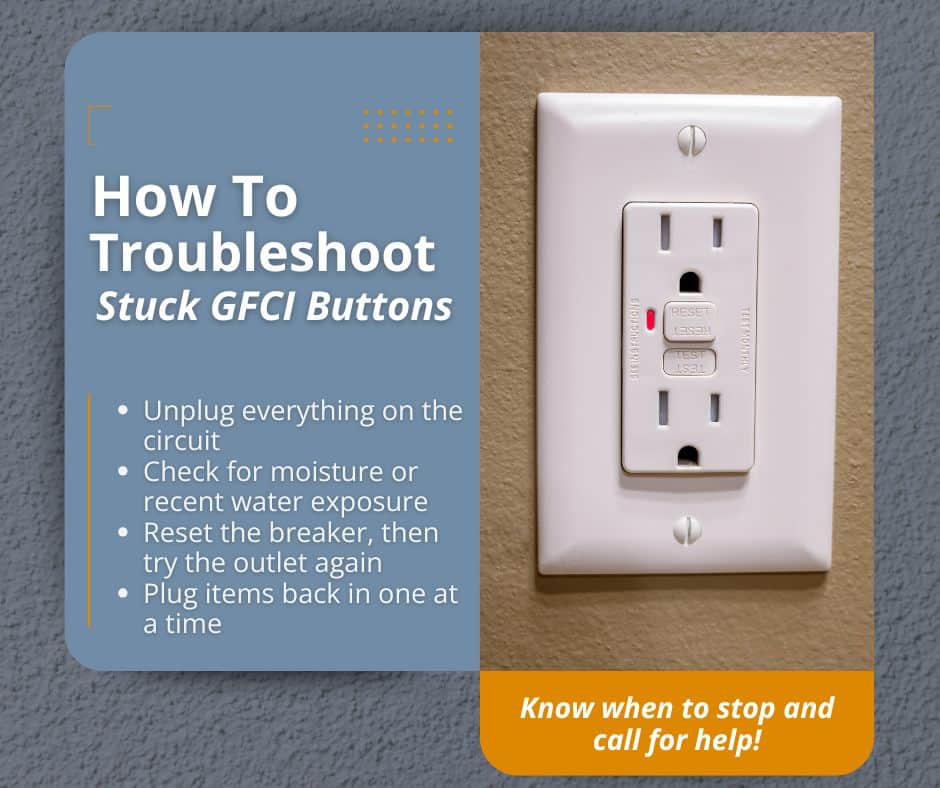
Step 2: Unplug All Devices on the Circuit
Many GFCI outlets protect multiple outlets downstream. This means an outlet in another room or outside could be causing the issue.
Unplug everything connected to outlets on the same circuit, including garage and exterior outlets. This isolates the GFCI and removes potential sources of electrical imbalance.
Step: 3 Check for Moisture or Recent Water Exposure
Moisture is one of the most common reasons GFCI outlets trip and refuse to reset. Bathrooms, kitchens, basements, and exterior outlets are especially vulnerable.
If the outlet was recently exposed to humidity, rain, or cleaning spray, allow it to dry completely before trying again.
Step 4: Press the Reset Button Firmly Once
After unplugging devices and allowing time for drying, press the reset button once. It should click and stay in place.
If it immediately pops back out, the outlet is still detecting a problem.
Step 5: Reset the Breaker and Test Again
Turn the breaker back on and try resetting the outlet again. If it resets successfully, plug devices back in one at a time to confirm none of them trigger another trip.
If the outlet still will not reset, stop troubleshooting.
Why Forcing the Reset Button Is a Bad Idea
Repeatedly forcing the reset button can damage the outlet and hide serious electrical problems. GFCI outlets trip for a reason.
A reset button that will not stay in place may indicate:
- Internal failure of the outlet
- Wiring defects within the circuit
- Ground faults elsewhere on the line
Ignoring these warnings increases the risk of shock, fire, or damage to connected devices.
When a Stuck Reset Button Signals a Bigger Issue
Sometimes a GFCI outlet is doing exactly what it should. It is preventing power from flowing because a dangerous condition exists.
Warning signs of a larger issue include:
- The outlet trips immediately after resetting
- Multiple outlets lose power at once
- Burn marks or discoloration on the outlet
- A burning smell or buzzing sound
- Frequent tripping without an obvious cause
These symptoms suggest problems beyond a single outlet and should be evaluated by a professional.
How Home Inspections Identify GFCI Problems
During a professional home inspection, GFCI outlets are tested to confirm they trip and reset properly. Inspectors also check whether GFCI protection is present where required.
Inspectors may document:
- Missing GFCI protection in required locations
- Outlets that fail to trip or reset
- Improper wiring indicators
- Inconsistent protection across a circuit
This information helps homeowners understand electrical safety risks without attempting repairs themselves and provides useful documentation for future planning.
Why Older Homes See More GFCI Issues
Older homes often experience more GFCI problems due to aging wiring, outdated outlets, or past modifications that do not meet current standards.
Electrical safety organizations note that GFCI outlets typically last around 10 years. Devices older than that may fail internally even if they appear intact from the outside.
Repeated GFCI issues in older homes can indicate broader electrical concerns that deserve professional evaluation.
Common Locations Where GFCI Issues Appear
Some areas are more prone to GFCI problems due to moisture, temperature changes, and heavy use.
These include:
- Bathrooms with poor ventilation
- Kitchens near sinks or dishwashers
- Garages with temperature swings
- Exterior outlets exposed to weather
- Basements with higher humidity levels
Monitoring these locations helps homeowners catch issues early and avoid repeated tripping.
Other Electrical Questions Homeowners Often Ask
Why do home inspectors test outlets like GFCIs during an inspection?
Inspectors test GFCI outlets to confirm they trip and reset properly in areas where water and electricity are present. This helps identify safety concerns that may not be obvious during normal use.
What other electrical items are typically reviewed during a home inspection?
In addition to outlets, inspectors review visible wiring, service panels, breakers, and other accessible electrical components to look for safety concerns, improper installations, or signs of wear.
Can moisture issues affect more than just outlets?
Yes. Moisture can impact walls, ceilings, basements, crawlspaces, and attic areas. During an inspection, moisture-related conditions are often noted because they can affect multiple systems in the home.
What is an AFCI, and how is it different from a GFCI?
AFCI protection is designed to reduce the risk of electrical fires by detecting certain types of arc faults in wiring. While GFCIs focus on shock protection, AFCIs address fire-related hazards. Inspectors note their presence and proper function where applicable.
When to Call a Professional
Knowing who to call makes a difference.
- You are buying or selling a home
- You want an overall assessment of electrical safety
- You need documentation of outlet issues
- You want to understand patterns across multiple outlets
While our head inspector is extremely well-versed in electrical systems, a home inspection identifies concerns but does not involve hidden components or repairs.
Call a licensed electrical professional if:
- The outlet will not reset after basic troubleshooting
- The breaker trips repeatedly
- There are signs of burning or overheating
- Multiple outlets lose power unexpectedly
Electricians diagnose and repair electrical systems safely.
Conclusion
A GFCI outlet with a stuck reset button should never be ignored, but it does not always signal an emergency. In many cases, careful troubleshooting resolves the issue. When it does not, the outlet may be warning of a deeper electrical concern.
Understanding how GFCI outlets work, recognizing warning signs, and knowing when to call the right professional helps homeowners protect both their safety and their home. For an inspection with trusted local experts, call Prospective today.