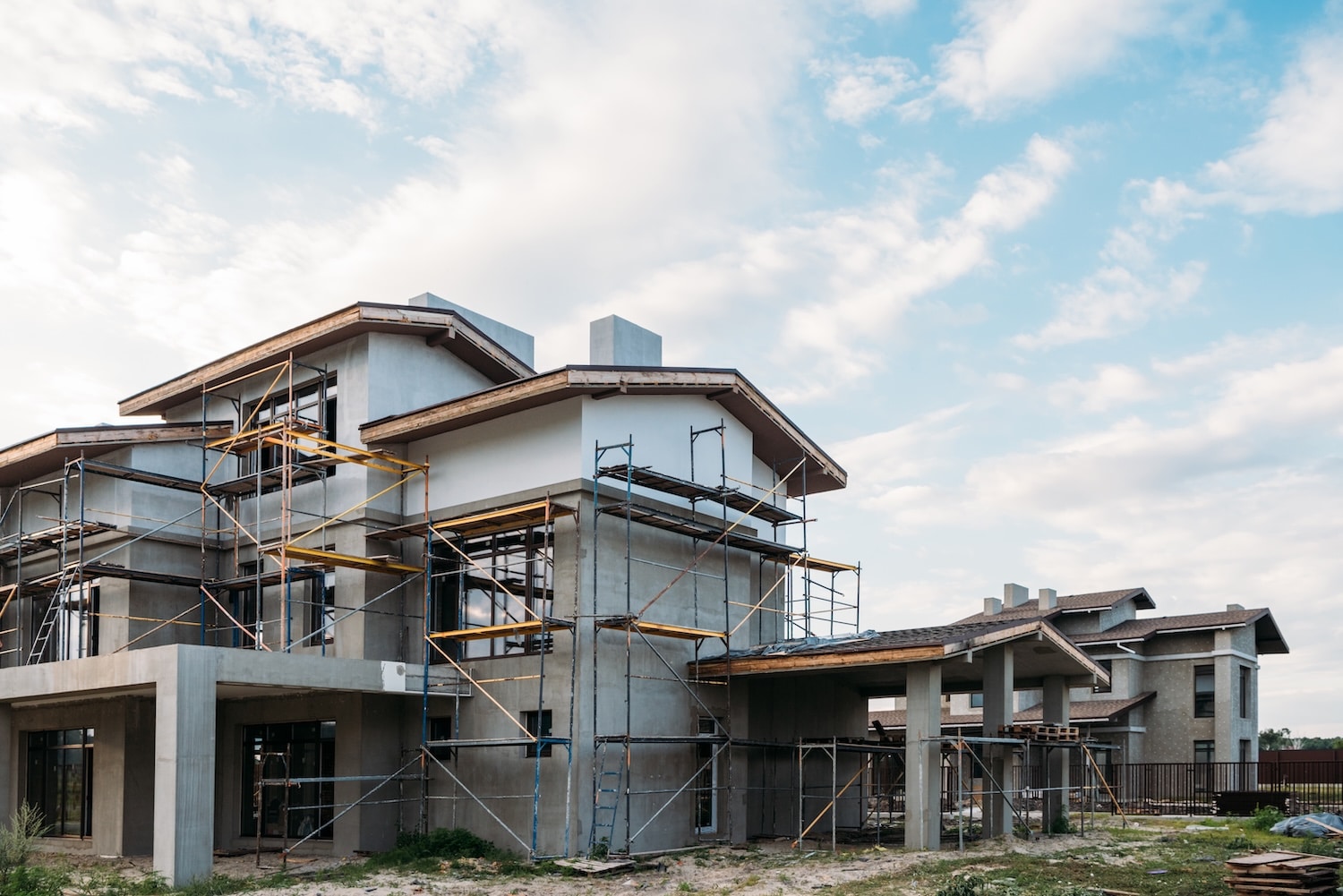
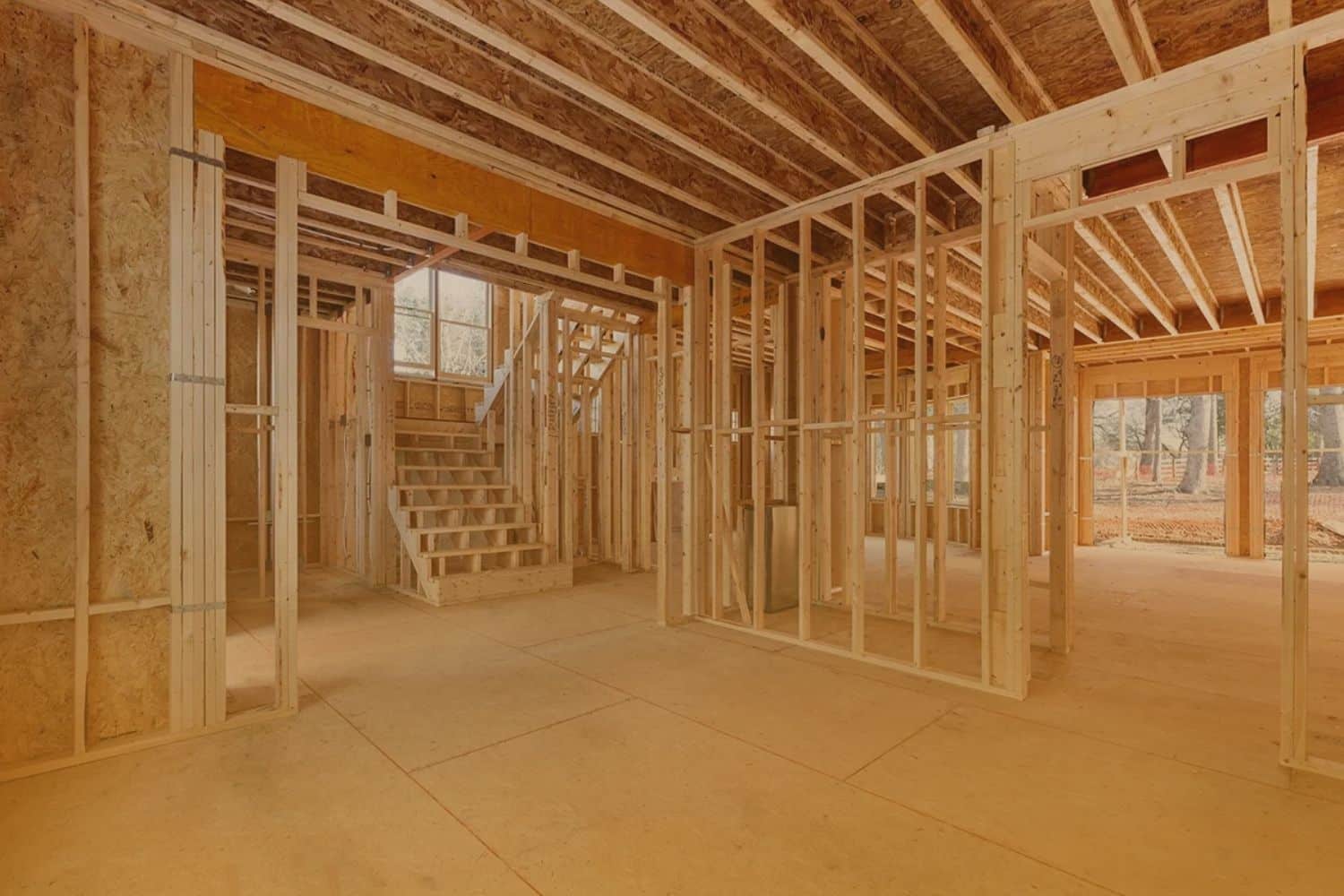
During new construction, there is a short window when nearly everything that matters in a home is visible. Framing is open, wiring and plumbing are exposed, and structural connections can be reviewed without cutting or guesswork. That window closes once insulation and drywall are installed. This is the stage when many buyers pause and wonder whether a pre-drywall inspection is necessary, or just an optional step that does not add much value.
In short, it’s always smart to ensure a pre-drywall inspection is completed for a new building.
To answer that completely, though, it helps to first understand what typically happens during new construction and what inspection options buyers actually have. Once that is clear, the role and value of a pre-drywall inspection becomes much easier to understand.
How Quality Is Typically Checked During New Construction
Most buyers assume their new home is being carefully inspected throughout the build. In reality, quality checks can fall into one of three categories.
1. Builder Self-Checks Only
Builders and subcontractors perform their own checks as work progresses. These checks are important, but they are not independent. Crews are often focused on speed, scheduling, and keeping the project moving.
Self-checks can miss issues such as:
- Inconsistent workmanship between trades
- Minor framing or alignment problems
- Installation shortcuts that still appear acceptable
These issues may not be intentional, but they can still affect long-term performance.
2. No Independent Inspection Until the End
Some buyers wait until the home is finished and schedule a standard new construction inspection just before closing. While this inspection is valuable, it occurs after drywall is installed and systems are no longer visible.
At that point, inspectors can identify symptoms, but not always causes.
3. Independent Inspections at Key Stages
The third and most comprehensive approach is ideal: scheduling inspections at key stages of construction, while access is still possible.
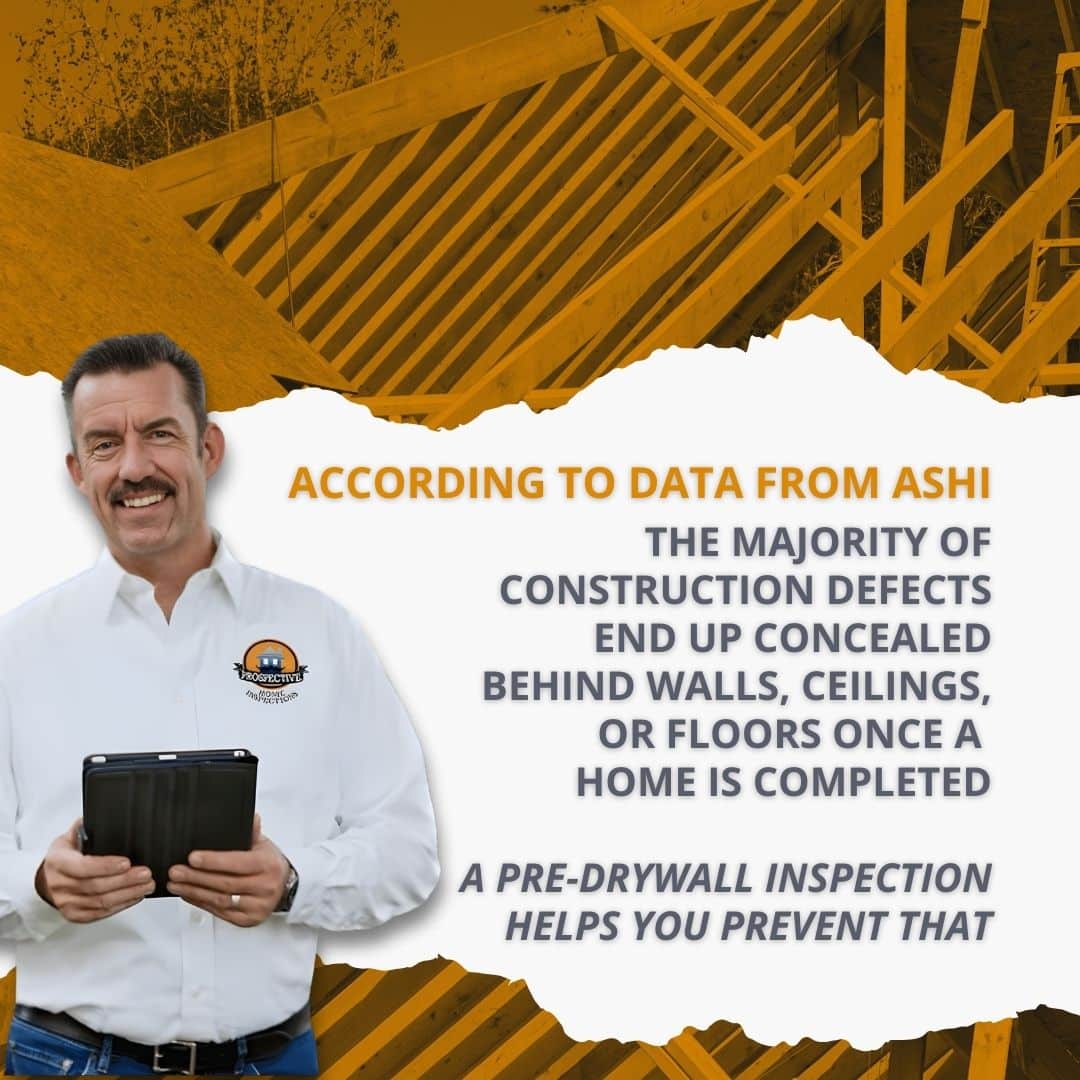
A pre-drywall inspection is the most important of these stages. Because framing, wiring, plumbing, and ductwork are still exposed before the walls are sealed up, this inspection allows direct observation of systems that will soon be hidden permanently. It adds a critical layer of review that neither builder self-checks nor end-of-project inspections can provide on their own.
A segmented approach gives buyers clearer insight into how the home was built, not just how it looks once it is finished.
Pre-Drywall Inspection vs Standard New Construction Inspection
A standard new construction inspection is typically performed when the home is complete. It focuses on finished surfaces, visible systems, and operational checks.
A pre-drywall inspection serves a different purpose.
|
Pre-Drywall Inspection |
Standard New Construction Inspection |
|
Occurs before drywall |
Occurs near completion |
|
Systems fully visible |
Systems mostly concealed |
|
Focuses on installation quality |
Focuses on performance and finish |
|
Allows easy corrections |
Corrections may require demolition |
Both inspections are useful, but they answer different questions. A pre-drywall inspection answers whether the home was built correctly before it was closed in.
A Breakdown of the Pre-Drywall Inspection Scope
Once the difference between inspection stages is clear, the next question buyers usually ask is what a pre-drywall inspection actually looks at in practice.
This inspection takes place after framing, plumbing, electrical, and HVAC rough-ins are complete but before insulation and drywall are installed. At this point, the home’s structure and core systems are fully exposed, which allows an inspector to review installation quality directly instead of relying on surface clues.
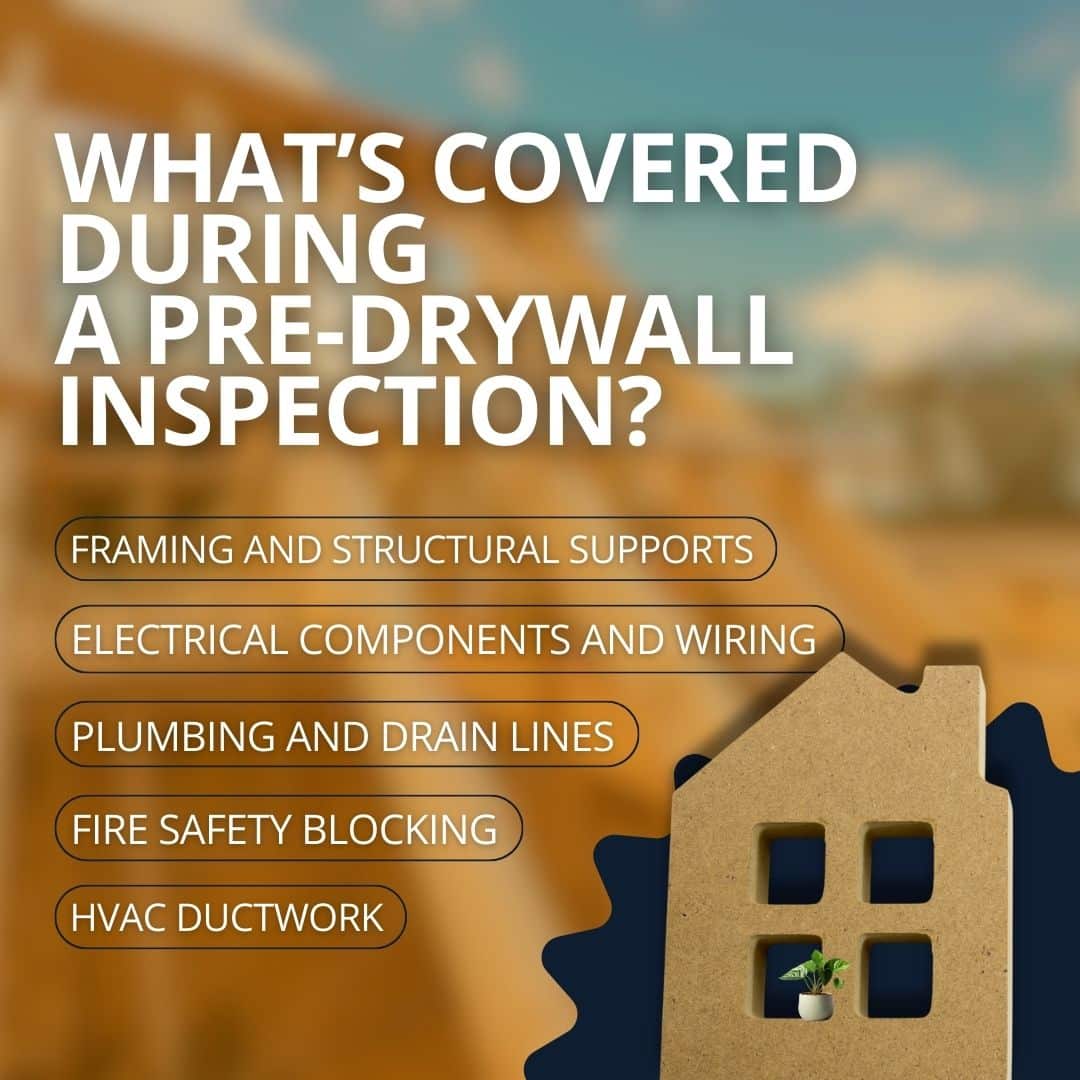
A pre-drywall inspection typically evaluates several major areas of the home, starting with the structure itself.
Structural Framing and Load Path Details
Framing is the backbone of the home. Once drywall goes up, most framing details hide permanently, which is why this stage matters so much.
During a pre-drywall inspection, an inspector can review items such as:
- Stud spacing and alignment
- Proper fastening of framing members
- Header and beam installation
- Load-bearing connections
- Truss alterations or damage
These details influence how walls stay straight, how loads transfer through the structure, and how the home responds over time. Even small issues can contribute to drywall cracking, sticking doors, uneven floors, or long-term movement.
Addressing framing concerns before drywall allows corrections to be made quickly, without removing finished materials or delaying later stages of construction.
Electrical Rough-In Installation Quality
Electrical systems are another area where access makes a significant difference. With walls open, inspectors can clearly see how wiring is routed and protected.
A pre-drywall inspection allows review of things like:
- Proper wire protection at framing penetrations
- Secure box mounting and placement
- Missing nail plates where wiring passes through studs
- Overcrowded electrical boxes
- Unsafe routing near sharp edges or fasteners
After drywall, these conditions are no longer visible. If issues are discovered later, verifying or correcting them may require cutting into finished walls, which increases cost and disruption.
Catching electrical installation concerns early helps reduce the chance of future access issues and improves overall safety.
Plumbing Rough-In and Water Risk
Plumbing systems are fully visible at the pre-drywall stage, making this the best time to evaluate how pipes are installed and supported.
Inspectors can identify concerns such as:
- Improper pipe supports
- Inconsistent drain slopes
- Missing protection at framing penetrations
- Poorly secured supply lines
According to insurance industry data, water damage remains one of the most common and costly sources of residential claims. Many of those losses begin with small plumbing issues hidden behind walls. Reviewing installation quality before drywall helps reduce the risk of leaks that might otherwise go unnoticed until damage is extensive.
HVAC Ductwork and System Layout
Heating and cooling performance depend heavily on how the ductwork installation goes. Before drywall, inspectors can follow duct runs from start to finish.
At this stage, common observations include:
- Disconnected or crushed ducts
- Inadequate support that allows sagging
- Ducts routed through unconditioned spaces
- Incomplete sealing at connections
These issues can affect comfort, airflow balance, and energy efficiency long after the home is complete. Once drywall is done, correcting ductwork problems often becomes far more invasive.
Fire Blocking and Draft Stopping
Fire blocking and draft stopping are safety features that slow the spread of fire and smoke. They are required in specific locations, but they are also easy to miss during fast-paced construction.
A pre-drywall inspection allows confirmation of:
- Fire blocking at vertical and horizontal openings
- Sealing around plumbing and wiring penetrations
- Proper separation between garages and living spaces
Because these features are hidden after drywall, the pre-drywall stage is often the last realistic opportunity to verify their presence.
Why Timing Is the Real Advantage of This Inspection
The value of a pre-drywall inspection is not just what is reviewed, but when it is reviewed.
When issues are identified before drywall:
- Repairs are faster and simpler
- Materials remain accessible
- Finished surfaces have no damage
- Builder corrections are easier to implement
By contrast, the same issues discovered after drywall often require cutting, patching, repainting, and additional coordination. Timing alone can be the difference between a straightforward fix and a costly one.
What a Pre-Drywall Inspection Does and Does Not Do
Understanding the scope of this inspection helps set realistic expectations.
A pre-drywall inspection does:
- Provide independent oversight during construction
- Document visible conditions before walls close
- Identify workmanship concerns while corrections are easier
A pre-drywall inspection does not:
- Replace a complete new construction inspection
- Guarantee a defect-free home
- Approve or reject the builder’s work
- Inspect finished systems or cosmetic items
It is one step in a layered inspection approach, not a standalone solution.
How Pre-Drywall Inspections Support Your Pre-Purchase Inspection
Homes that receive a pre-drywall inspection often have smoother final inspections. Early corrections reduce the likelihood of repeated findings and late-stage surprises.
In practice, this can mean:
- Fewer major issues were identified at closing
- Less cosmetic damage from last-minute repairs
- Fewer delays during the final walkthrough
- Clear documentation of earlier conditions
Instead of discovering problems at the end, buyers confirm that earlier concerns were addressed.
Why This Inspection Matters for Buyers in Growing Areas
In fast-growing communities, construction schedules are tight, and multiple homes are often being built at once. Speed increases the chance that details get missed, even when crews are experienced.
A pre-drywall inspection provides:
- Independent documentation during construction
- Transparency before walls close
- Confidence that systems were installed as intended
For buyers, it shifts the process from reactive to proactive.
Related Questions Buyers Might Ask
What inspections should I schedule during new construction?
Many buyers choose inspections at different stages, such as pre-drywall, final walkthrough, and sometimes specialty inspections, depending on how the home is built.
Does a final inspection catch everything in a new home?
Final inspections focus on visible and operational items. Some installation details are no longer accessible once walls and finishes are complete.
Should I get an inspection even if the home is brand new?
New homes can still have workmanship issues or missed details. Independent inspections provide an extra layer of review beyond the build process.
Are there inspections that focus on specific systems or concerns?
Yes. Some inspections focus on structural components, moisture concerns, or system performance, depending on the home and buyer priorities.
Conclusion
So, is a pre-drywall inspection necessary? For buyers who want clarity before walls are closed, the answer is yes.
This inspection provides a rare opportunity to confirm how a home was built while everything is still visible. It helps issues get addressed when corrections are simplest and supports better long-term outcomes.
Prospective Home Inspections helps new construction buyers navigate this critical stage with clear, unbiased inspections that protect their investment.